
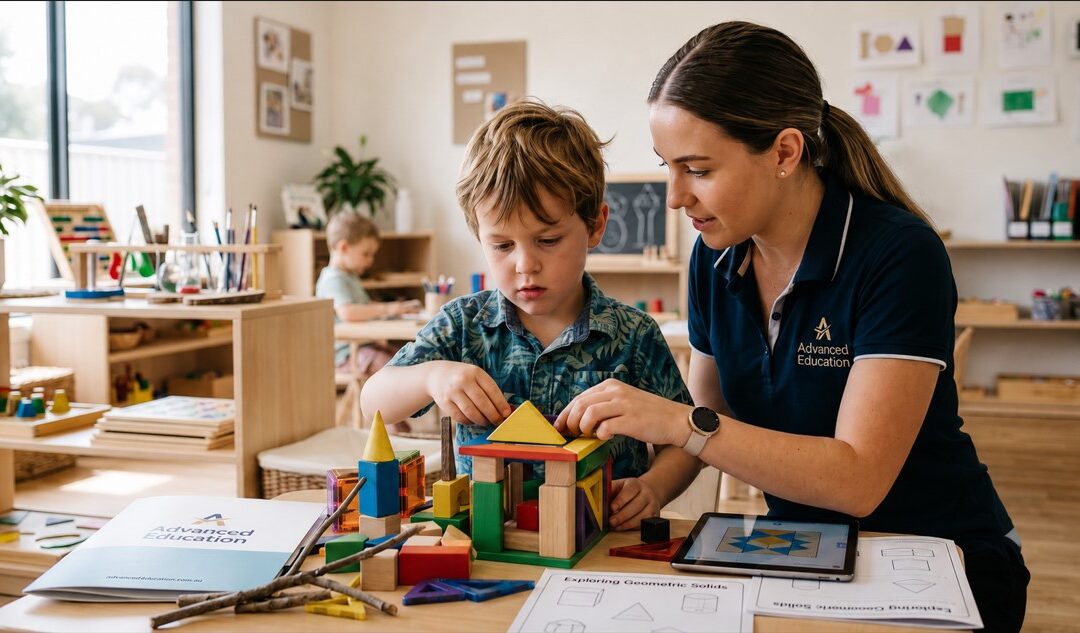
Every parent knows the moment. You ask your child to pack their school bag, finish their homework, or tidy their room, and somewhere between the instruction and the outcome, things fall apart. It’s not laziness, and it’s rarely a lack of intelligence. More often, it’s a gap in the everyday skills that make independence possible organisation, planning, self-management and problem solving.
These are skills that don’t always show up on a school report card, but they shape almost everything else: how confidently a child starts their homework without being asked twice, how calmly they handle an unexpected change to their routine, and how capable they feel when a task looks difficult at first glance.
At Advanced Education, we believe that developing independence in children is one of the most valuable things a learning support session can offer often more valuable, in the long run, than mastering one more topic in the curriculum. This article looks at what independence actually involves, why it matters so much, and how individualised, one-on-one learning sessions can help a child build these skills at their own pace.
What Do We Mean by “Independence” in Learning?
Independence isn’t about a child doing everything alone with no support. It’s about a child having the tools, confidence and habits to manage tasks, make decisions and solve problems without needing constant direction from an adult.
In a learning context, this shows up as:
- Organisation — keeping track of homework, deadlines, and materials without being reminded every time
- Planning — breaking a task into steps and working out what needs to happen first
- Following instructions — understanding multi-step directions and carrying them through
- Problem solving — trying a different approach when the first one doesn’t work, rather than giving up or waiting to be told what to do
- Self-management — recognising when to take a break, ask for help, or push through a difficult moment
- Completing tasks independently — starting and finishing work with a sense of ownership, rather than needing supervision from start to end
None of these skills are fixed traits. They’re learned, practised and reinforced over time and for many children, especially those who find school overwhelming or who learn differently to their peers, they need to be taught deliberately rather than picked up by accident.
Why These Skills Matter So Much
It’s tempting to think of organisation and self-management as “soft skills” that matter less than knowing how to solve a quadratic equation or write a persuasive essay. In reality, the opposite is often true.
A child who struggles to organise their thoughts will find it hard to write that essay, no matter how much vocabulary they know. A student who can’t plan their time will run out of it before an assignment is finished, regardless of how well they understand the content. And a child who hasn’t learned how to problem-solve independently will hit a wall the moment a question looks even slightly different from the example in class.
These skills also extend well beyond school. They influence how a child manages chores at home, how they cope with change, how they interact in group settings, and eventually, how ready they are for the independence that comes with part-time work, further study, or simply managing their own day. Building these foundations early gives a child tools they will keep using for the rest of their life.
Why One-on-One, Individualised Learning Works So Well for This
Independence looks different for every child. Some children need support breaking tasks into smaller, more manageable steps. Others need help building the confidence to try something without checking in first. Some thrive with visual schedules and checklists; others respond better to verbal walk-throughs or hands-on practice.
This is exactly why a personalised, one-on-one approach tends to work far better than a one-size-fits-all classroom setting when it comes to building independence.
1. Sessions Move at the Child’s Own Pace
In a group or classroom setting, a tutor or teacher has to keep the whole group moving together. In an individualised session, the pace is set entirely around the child in front of them. If a child needs extra time to work through a planning exercise, or extra repetition to build a habit like checking their own work, there’s no pressure to rush ahead before they’re ready.
2. Skills Are Practised in Context, Not in Isolation
Rather than teaching “organisation” as an abstract concept, a tutor can build it directly into real homework, real assignments and real routines. A student learns to plan their own study session, break down their own assignment, or organise their own folder because they’re doing it with real material, with support close at hand if they get stuck.
3. Mistakes Become Safe Learning Opportunities
Independence grows fastest when a child is allowed to try, get something wrong, and work out how to fix it with a patient adult nearby rather than taking over. In a one-on-one setting, a tutor can hold back just enough to let a student problem-solve on their own, then step in with guidance at exactly the right moment. That balance is much harder to strike in a busy classroom of twenty or more students.
4. Progress Is Genuinely Individualised
Every child starts from a different point. One student might already be confident planning a project but needs support following multi-step verbal instructions. Another might manage instructions well but struggle to self-start a task without prompting. Individualised sessions allow a tutor to identify exactly where a child is, and build a plan around their specific goals not a generic checklist.
What This Can Look Like in Practice
Building independence isn’t about a single “independence lesson.” It’s woven into the way a session is run, week after week. Some practical examples include:
- Using a visual or written checklist so a child can track their own progress through a task, rather than relying on someone else to tell them what’s next
- Practising breaking a big task into smaller steps — for example, turning “finish the assignment” into a short list of manageable stages
- Gradually reducing prompts over several sessions, so a child moves from needing step-by-step direction to managing more of the task themselves
- Encouraging a child to attempt a problem before help is offered, then working through where it went wrong together
- Building simple routines, like starting every session by reviewing what’s due and what materials are needed
- Celebrating moments of independent effort, not just correct answers recognising when a child tries something on their own, asks a clarifying question, or catches their own mistake
Over time, these small, consistent practices add up. A child who once needed constant reminders to get started on homework can begin to sit down and start on their own. A student who once froze when a question didn’t match the example in class can begin to try a different approach without panicking.
Independence Looks Different for Every Child
It’s worth saying clearly: there is no single timeline or benchmark for “independence.” Some children build these skills quickly once they have the right support and structure. Others need longer, more repetition, and more patience and that’s entirely normal, particularly for children who learn differently, who experience anxiety around schoolwork, or who are still developing executive function skills like working memory and attention.
This is why sessions at Advanced Education are tailored to each participant’s individual goals, rather than following a fixed program. Our tutors work closely with students and where relevant, with parents and support coordinators to understand where a child currently sits with organisation, planning and self-management, and to build a session plan that supports steady, realistic progress toward greater independence. You can read more about how our sessions are structured on our How It Works page.
Supporting Students with Additional Learning Needs
For families supporting a child with additional learning needs, including students accessing supports under the NDIS or the Lifetime Support Authority, building independence is often one of the most meaningful outcomes a learning program can offer. Our tutors are experienced in supporting students with diverse learning needs, and take the time to understand each child’s individual circumstances, communication style and goals.
Our approach is always tailored to the individual sessions are designed around each participant’s personal goals and are delivered in line with individual circumstances and applicable support arrangements. Whether a family is working with a support coordinator or simply looking for a tutor who can adapt their approach, our aim is to build practical, everyday skills alongside academic support.
The Long-Term Value of Independence
It’s easy to focus on short-term wins a finished assignment, a completed worksheet, a tidy folder. But the real value of building independence shows up much further down the track.
A child who has learned to plan their own study time is better prepared for the demands of senior secondary school. A teenager who can problem-solve independently is more resilient when they hit an unfamiliar question in an exam. A young person who has practised self-management is more ready for the transition into part-time work, further education, or simply managing their own responsibilities as they grow older.
These are outcomes that go far beyond any single subject or school year. They’re life skills and they’re worth investing in early.
How Advanced Education Can Help
At Advanced Education, our tutors don’t just help students with the content of a subject they help build the habits and confidence that make learning, and life more broadly, more manageable. Through individualised, one-on-one sessions, we work with each student to build organisation, planning, problem-solving and self-management skills at a pace that suits them.
If you’d like to talk about how a personalised session plan could support your child’s independence whether that’s organisation, following instructions, managing tasks, or building the confidence to try things on their own we’d love to hear from you. You can also view our session pricing to help plan ahead.
Get in touch to talk about building independence through a personalised session plan. Call us on (08) 8257 9151, or book a session online to get started.
Frequently Asked Questions
At what age should a child start developing independent learning skills?
There’s no fixed age independence skills develop gradually and at different rates for every child. Many families find that starting to build these habits in primary school makes the transition into the greater demands of secondary school much smoother, but it’s never too late to start.
Will building independence take away from academic tutoring time?
No. Organisation, planning and problem-solving skills are woven into regular sessions alongside subject content, rather than replacing it. In fact, many students find their academic work becomes easier to manage once these underlying skills are stronger.
Do you support students with additional learning needs?
Yes. Our tutors are experienced in supporting students with a range of learning needs, including students accessing supports under the NDIS and the Lifetime Support Authority. Learn more on our Special Needs Tutoring page. Sessions are tailored to each participant’s individual goals and circumstances.
How is progress tracked over time?
Tutors work with students and parents, where appropriate to set realistic, individual goals and monitor progress session by session, adjusting the approach as a child builds confidence and skill.